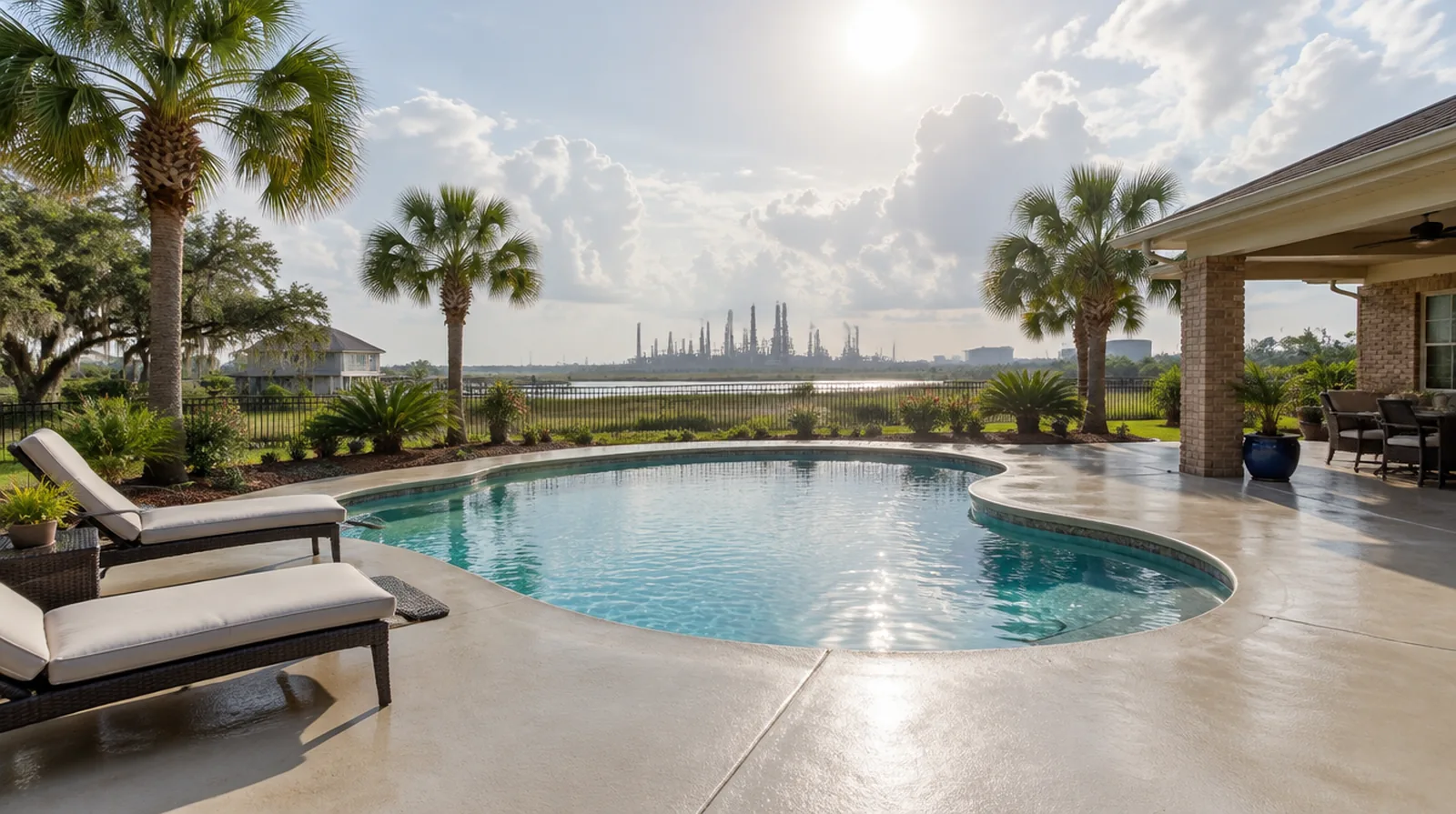
What humidity does to outdoor concrete
Constant humidity and shade let mildew, algae and mold grow on concrete. Salt air leaves residue, and heavy rains wash dirt into pores. Over time, patios and walks turn black and slippery, and stamped or colored concrete fades in the sun.
What sealing does
Sealers reduce how much water, salt and dirt can soak in. Penetrating sealers protect from within with a natural look. Topical sealers enhance color and add sheen. Some include mildew inhibitors.
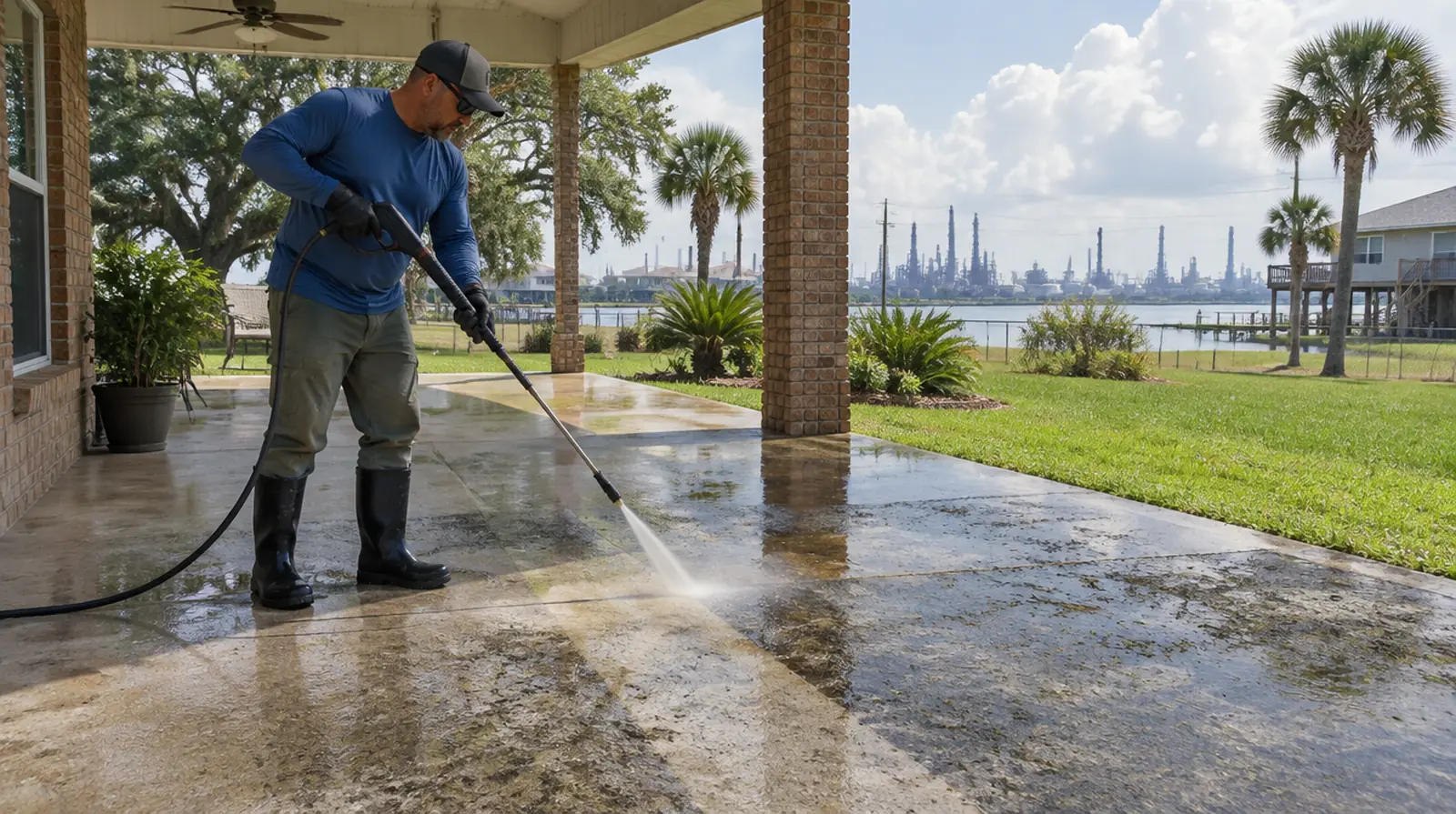
Patios and porches
Covered porches stay damp and shaded, which encourages mildew. Cleaning followed by a breathable sealer helps keep growth down.
Pool decks
Pool decks need slip resistance and protection from chlorine and salt systems. We use sealers rated for pool areas and add texture as needed.
Stamped and colored concrete
Stamped patios fade in strong sun. A UV-resistant topical sealer restores color and protects the surface.
Preparation
We pressure wash, treat mildew, remove peeling sealers and repair cracks before sealing.
When to reseal
Topical sealers usually need refreshing every two to three years in this climate. Penetrating sealers last longer.
Timing
We schedule sealing for dry stretches so the product can cure properly.
Protecting landscaping
We cover plants and control overspray so it stays on the concrete.
Signs it is time to seal
Splash water on your concrete. If it darkens and soaks in within a minute, the surface is absorbing water. Other signs include black mildew returning soon after cleaning, faded color on stamped patios and stains that spread rather than staying on the surface.
Choosing the right product
Shaded porches and walks usually get a breathable penetrating sealer with mildew resistance. Sunny stamped patios usually get a UV-resistant topical sealer for color. Pool decks get a slip-resistant system. We explain each choice in your quote.
Commercial walkways
Businesses, churches and apartment complexes have long runs of sidewalk and entry areas that collect mildew and stains. Sealing them keeps entries looking cared for and reduces slip hazards. We can schedule this work early in the morning or on weekends.
Care after sealing
Keep foot traffic off for a few hours and vehicles off for a day or two. Rinse regularly and treat any new mildew early.
Salt air and metal stains
Salt air corrodes patio furniture, grills and metal planters, and the rust runs onto the concrete. Sealing makes those stains easier to remove and slows how deeply they soak in. We can treat existing rust marks before sealing.
Garage aprons and side yards
The apron outside the garage door and narrow side yards collect runoff, dirt and mildew. Including them in a sealing project protects the whole property and gives everything a consistent look. It also costs less than calling us back for separate visits later.
Penetrating versus topical
Penetrating sealers soak into the concrete and react inside the pores. They do not change the look much and they do not wear off with foot traffic. Topical sealers sit on the surface, deepen color and add sheen, but they wear in high-traffic spots and need periodic refreshing. In shaded, damp areas, breathable products are usually the better choice because they let moisture escape instead of trapping it under a film.
Have several surfaces? Send a few photos of the porch, patio, walks and pool deck, and we will suggest which sealer suits each one before the visit. That keeps the estimate quick and the written quote clear, so you know what to expect.
Protect your concrete
Call (409) 250-4105 for a free estimate.