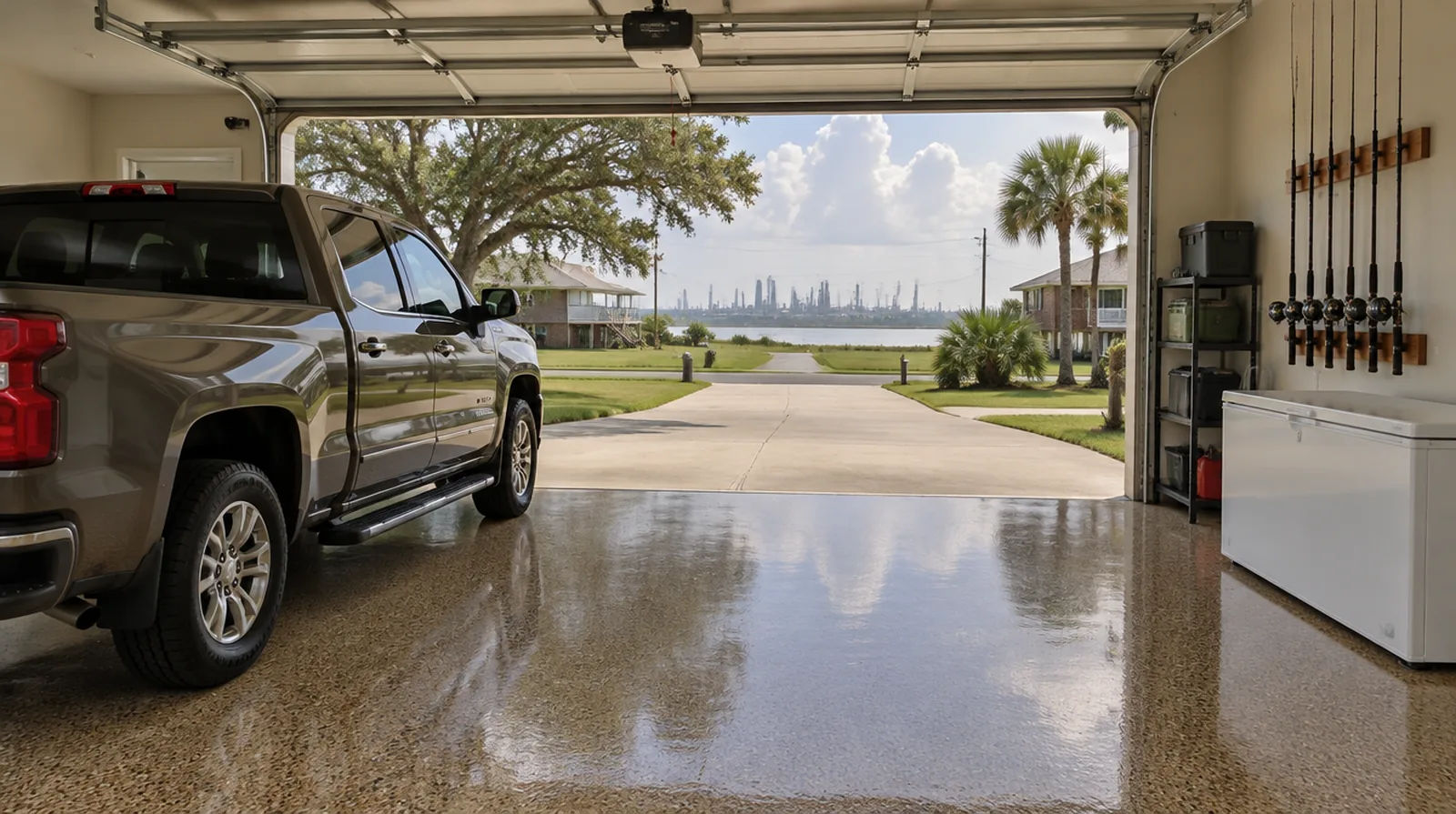
The problem with bare garage slabs here
Garage concrete on the coast takes a beating from more than tires. Moisture rising from the ground keeps the slab damp, so it sweats on muggy mornings and develops white mineral deposits called efflorescence. Mildew grows along walls and under stored items. Oil, fuel and fish cleaning water soak in and leave stains and odors. Over time, the surface weakens and powders. A coating seals all of that out and gives you a surface you can hose off.
Why moisture matters so much
Many store-bought garage kits and older paint jobs fail here within a year or two. The usual cause is moisture vapor pushing up through the slab and breaking the bond from below, which shows up as bubbles, blisters and peeling. We measure moisture before we quote. When readings are high, we use a moisture-mitigating epoxy primer that blocks vapor and creates a stable base for the rest of the system.
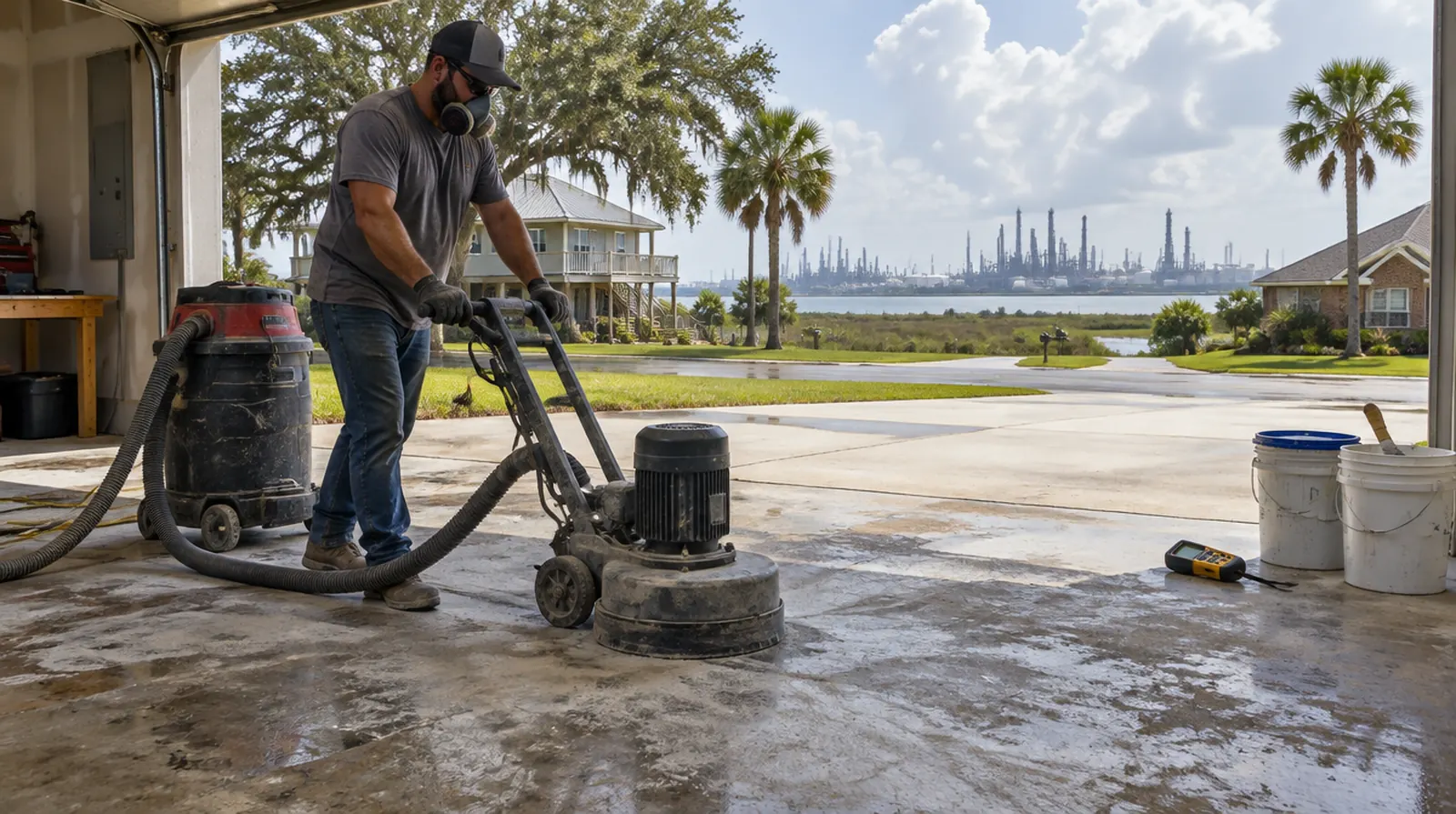
Our garage system
We diamond grind the slab with dust collection, which removes weak surface concrete, old coatings and contamination. We fill cracks and pits, apply the appropriate primer, build a pigmented base coat and broadcast flake if you choose. A UV-stable clear topcoat seals everything in. The result is a thick, seamless floor that resists oil, gasoline, antifreeze, salt and household chemicals.
Hot tires and heavy trucks
Summer asphalt gets extremely hot, and hot tires can soften weak coatings and pull them off the floor. Full-size pickups and trailers add weight. We use materials rated for hot tire pickup and give you clear cure times, so the floor reaches full strength before you park on it.
Boats, gear and garage workshops
Many local garages hold boats, coolers, tackle, crab traps and outboard motors. Saltwater drips and fish cleaning are common. A coated floor resists salt and odor and cleans quickly. If you work on engines or equipment, we can add extra thickness and texture in work areas and choose topcoats that resist solvents and fluids.
Slip resistance
Humidity can leave a film of condensation on smooth floors, and wet shoes come in from rain. Flake broadcasts and anti-slip additives give the surface grip without making it hard to clean. We adjust texture based on how you use the space.
Colors and finishes
Tan, brown, gray and black flake blends hide dust, sand and tire marks. Lighter colors brighten a dim garage. Satin finishes reduce glare from bright sun through the open door. We bring samples so you can compare them in your own light.
Timeline
Most garages take one to two days, depending on size, repairs and moisture conditions. Foot traffic is usually fine the next day, and vehicles return after one to several days depending on the system. We confirm the schedule before work begins.
Care
Hose off salt and sand, mop with a mild cleaner and squeegee standing water. Keep the garage ventilated on humid days, and use pads under jack stands and heavy equipment.
Rental homes
Landlords like coated garages because they survive tenant turnover, wash clean between leases and photograph well for listings.
Ventilation and odor
We ventilate during install with fans at the door and low-odor products where possible, and we tell you how long to keep the house door closed. Most families stay home through the job without trouble.
Every quote lists the primer, coats, colors and cure times in writing.
Get your garage floor quote
Call (409) 250-4105 for a free estimate.