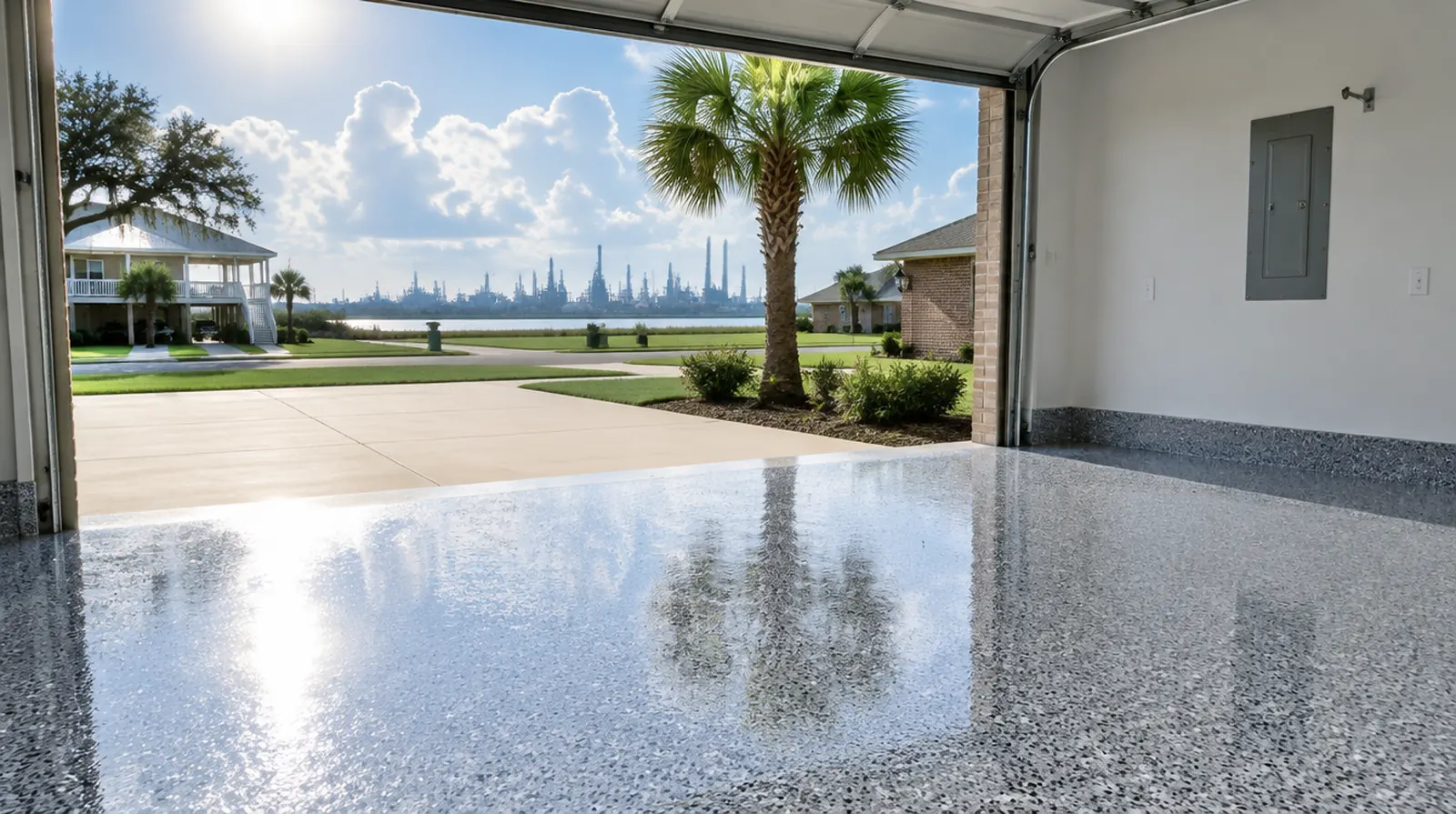
What polyaspartic is
Polyaspartic is a type of polyurea coating. It cures much faster than traditional epoxy, stays flexible, resists UV light and bonds well to properly prepared concrete. It can be used as a base coat, a topcoat or both.
Fast cure
A traditional epoxy system can take days before vehicles return. Polyaspartic systems often allow foot traffic within hours and vehicles within a day or two. That is a big advantage for one-garage homes and businesses that cannot shut down for long.
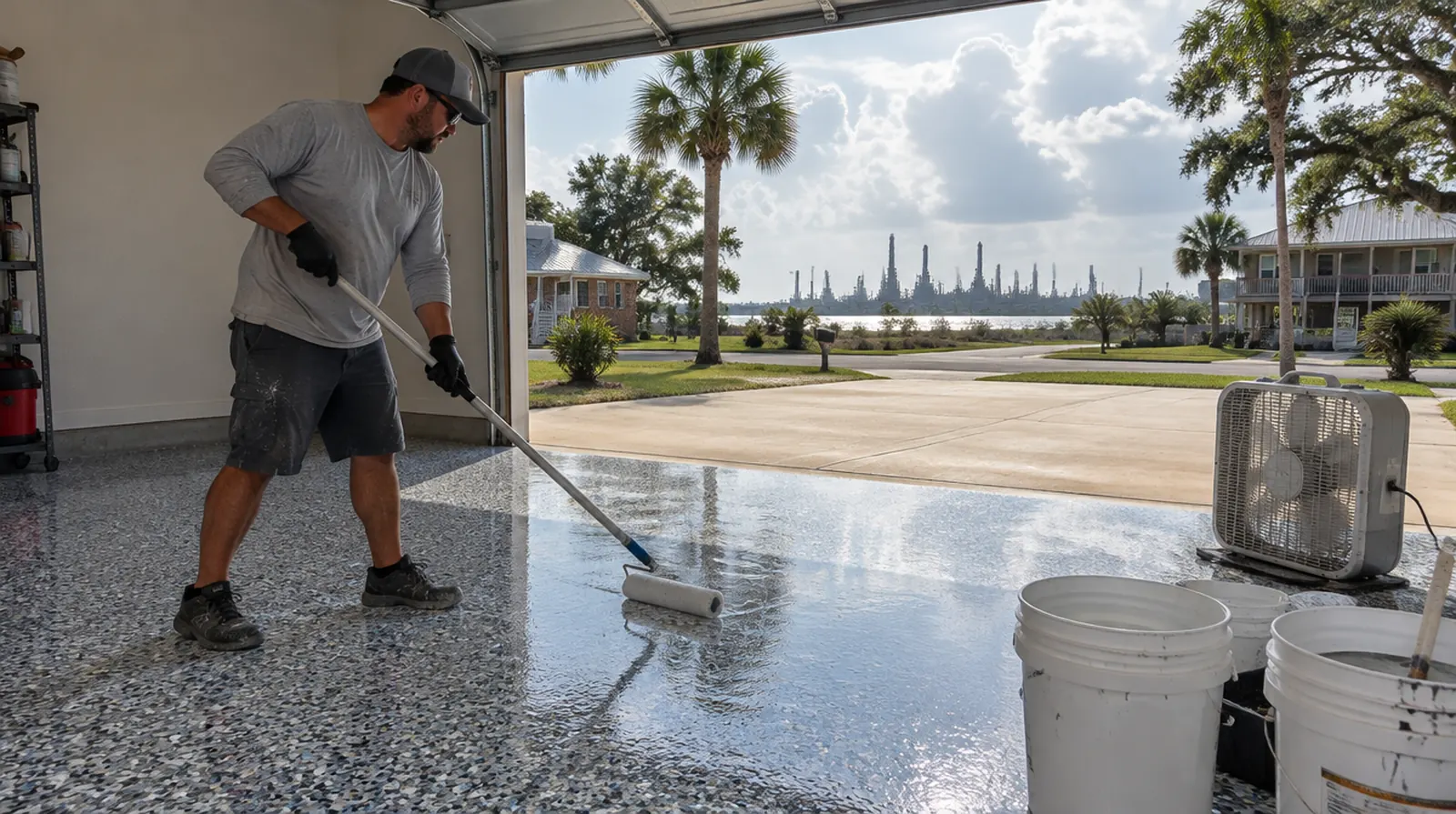
UV stability in strong sun
Gulf Coast sun is intense, and many garages sit with doors open for hours. Many epoxies yellow under that exposure. Polyaspartic stays clear, so floors near the door keep their color.
Heat and humidity
Polyaspartic tolerates a wide range of temperatures during application. Its fast cure also means less time for humidity to affect the surface. We still test moisture in the slab and use a moisture-mitigating primer when needed, because vapor from below can affect any coating.
Chemical and salt resistance
Polyaspartic resists oil, fuel, antifreeze, salt and many household chemicals. Salt residue from boats and vehicles rinses off without staining.
Hot tire resistance
Hot tires coming off summer pavement can soften weaker coatings. Properly installed polyaspartic systems resist this and hold up under heavy trucks.
Systems we offer
We install full flake polyaspartic systems, solid color systems and clear coats over polished or stained concrete. Each starts with grinding and repairs.
Tradeoffs
Polyaspartic costs a bit more than basic epoxy and requires experienced installers because it cures quickly. For many homeowners, the speed and UV stability are worth it.
Care
Rinse salt and sand, mop with mild cleaner and avoid harsh solvents. Use pads under heavy equipment.
Who it suits best
Polyaspartic is a strong fit for single-garage homes where the truck must come back inside quickly, for garages that get strong afternoon sun and for businesses such as auto detailers and boat shops that cannot close for days. It also helps when the forecast leaves only a short dry window for an install.
Gloss or satin
Gloss looks bright and shows off flake color. Satin reduces glare and hides dust and fine scratches. Both resist salt and chemicals equally.
What we need from you
Clear the garage before install day, park on the street and keep pets inside. We handle grinding through final cleanup and let you know when the floor is ready for foot traffic.
Questions homeowners ask
People often ask whether polyaspartic is the same as epoxy. It is not. It is a different chemistry with faster cure, better sun resistance and more flexibility. They also ask whether it can go over an existing coating. Usually the old coating must be ground off so the new system bonds to clean concrete. And they ask how long it lasts. With proper preparation, moisture control and normal care, a polyaspartic garage floor can look good for many years.
Pairing with a moisture primer
On damp slabs, we combine a moisture-mitigating epoxy primer with polyaspartic base and top coats. You get vapor protection plus fast cure and sun resistance in one system.
Ready to schedule? Ask for our next open install date and we will hold it while you review the written quote, so you can plan around work, school and the weather forecast.
Each quote spells out the primer, coats, colors and cure times in plain terms.
Ask about fast-cure floors
Call (409) 250-4105 for a free estimate.