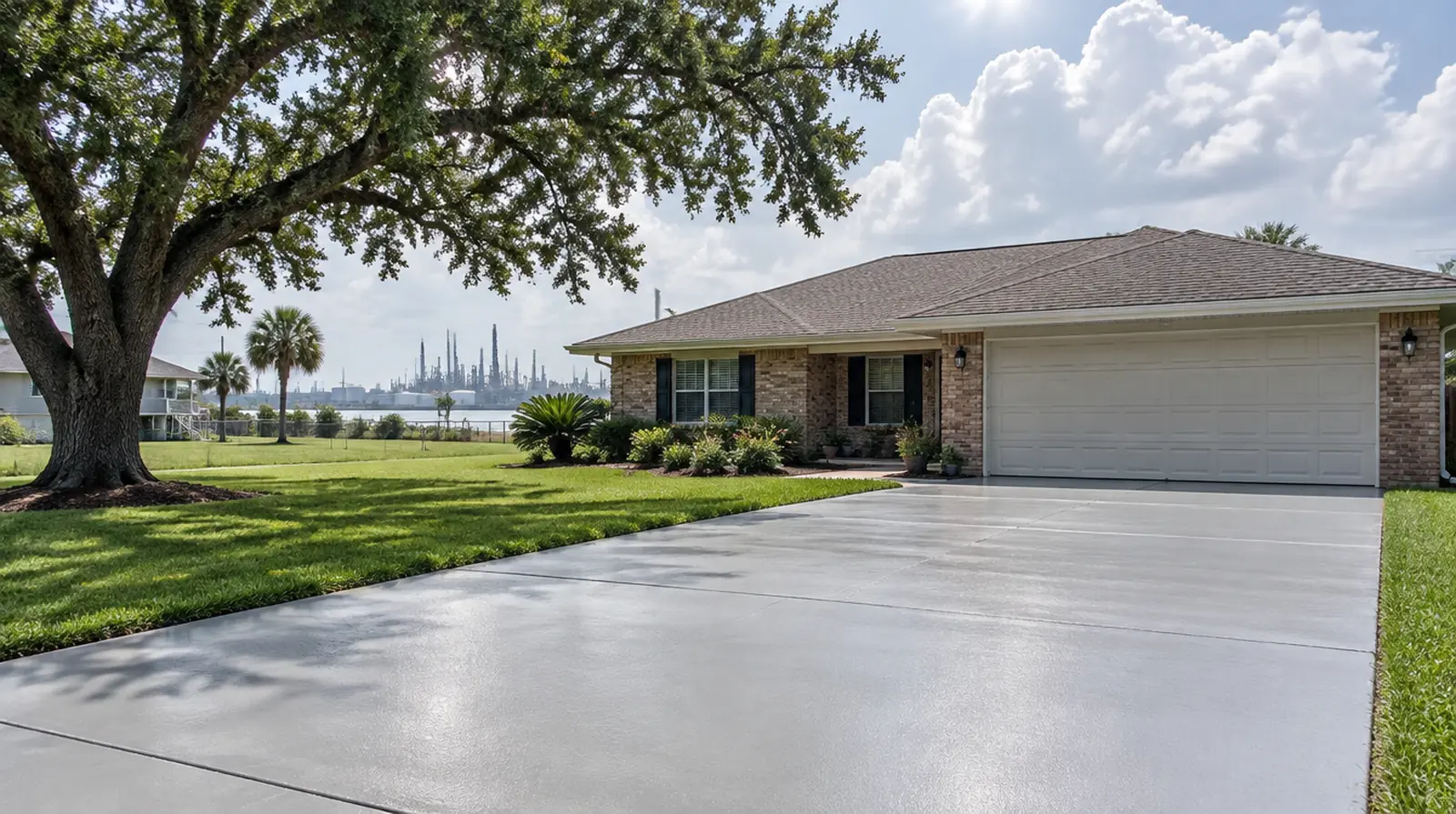
Common driveway problems
Driveways here deal with mildew, oil leaks, tire marks, root heave from trees, cracks from soil movement and fading in strong sun. Heavy trucks and trailers add stress.
Cleaning and mildew removal
We pressure wash with hot water and treatments that kill mildew and lift oil. Clean concrete looks dramatically better even before sealing.
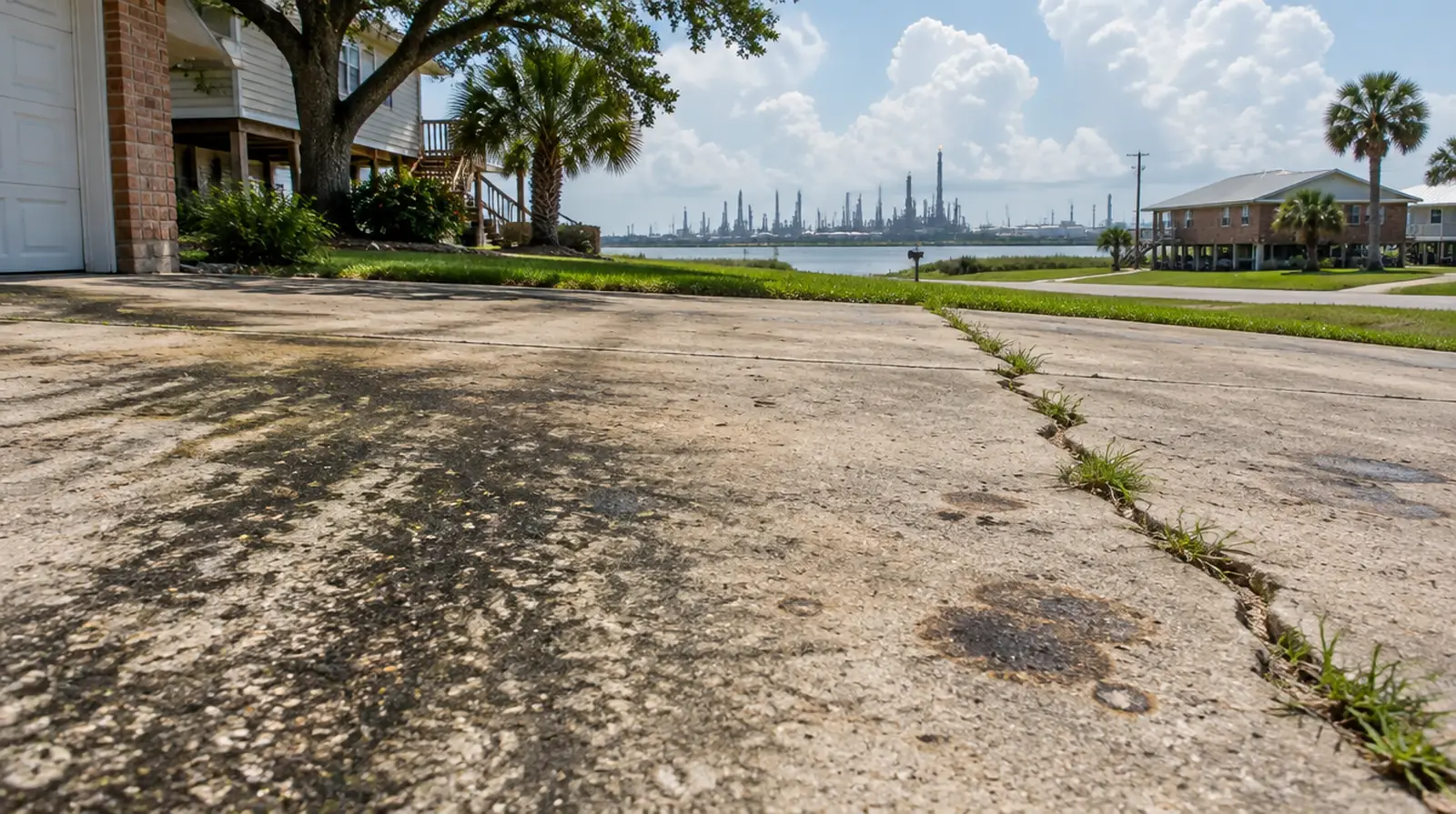
Crack repair
We fill cracks with flexible fillers that move with the slab, which matters in clay soils that swell and shrink with moisture.
Resurfacing
When the surface is worn or pitted, a polymer-modified resurfacer creates a fresh wear layer and a uniform look.
Sealing
Penetrating sealers protect from water and stains with a natural look. Topical sealers enhance color. We choose based on condition and goals.
Why not epoxy outdoors
Standard epoxy yellows in sun and can become slippery when wet. We use materials designed for outdoor use.
Garage apron coordination
If we are coating your garage, we coordinate the transition at the door for a clean look.
Drainage
Standing water encourages mildew and damages concrete. We point out low spots and discuss options.
Curb appeal
A clean driveway improves first impressions for sales and rentals.
Options compared
Cleaning and sealing is the least expensive option and works when the surface is mostly sound. Crack repair plus sealing handles moderate damage. Resurfacing addresses widespread wear. Full replacement is only needed when the slab is broken or heaving badly. We explain which option fits your driveway and why.
Trucks, trailers and boats
Many driveways here carry work trucks, boat trailers and RVs. We choose resurfacers and sealers rated for that weight and plan cure times so you know when you can park again.
What to expect on project day
We block off the driveway, clean and treat stains and mildew, repair cracks and apply the resurfacer or sealer. Most driveways are walkable the same day and ready for vehicles within one to three days.
Rental and investment properties
Landlords and investors often restore driveways between tenants or before listing. A clean surface helps photos and first impressions. We can work on tight timelines and coordinate with property managers.
Clay soil and movement
Soils here can swell when wet and shrink when dry, which moves slabs and opens cracks. We use flexible crack fillers and joint sealants that move with the concrete rather than popping out after a season. Keeping water from pooling along the edges also helps reduce movement.
Tree roots
Live oaks and other large trees can lift driveway sections. We note root damage and discuss whether repair, leveling or replacement of a section makes sense before any coating work.
Combining projects
Many homeowners restore the driveway, front walk and porch together, along with sealing the patio. Doing it at once costs less than separate visits and gives the property a consistent look.
Heat and sun
Long summers bake driveways in direct sun. Some sealers soften or turn white in heat and humidity. We use products formulated for hot, humid climates, apply them at the right film thickness and schedule work so they can cure before afternoon storms roll in. Every quote spells out the product, the steps and the cure time in writing.
Want a quick opinion? Send a photo of the driveway from the street and a close-up of the worst area. We can usually tell from that whether cleaning and sealing, crack repair or resurfacing makes the most sense before scheduling a visit.
Restore your driveway
Call (409) 250-4105 for a free estimate.