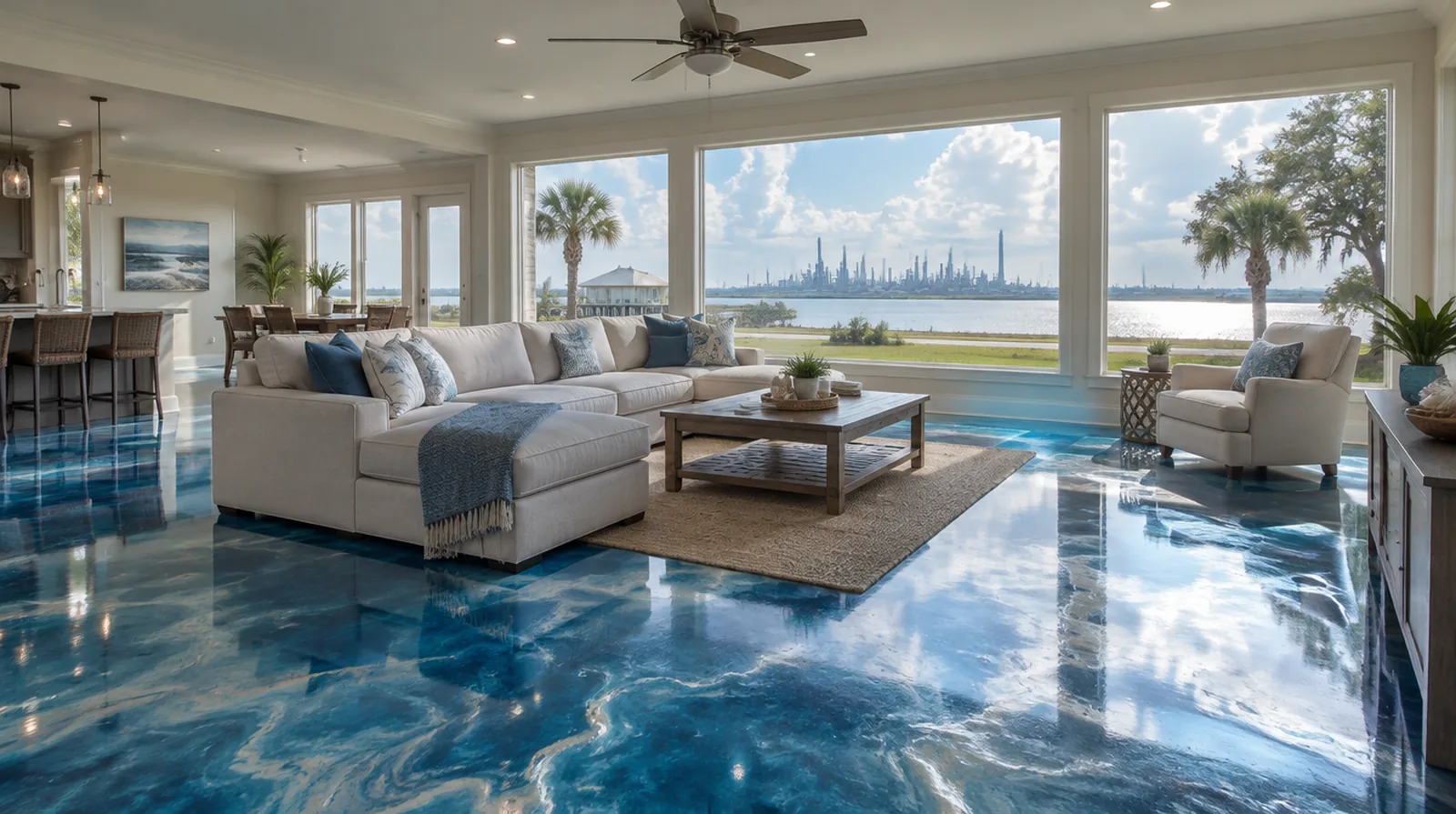
How metallic floors are made
Metallic epoxy contains fine mica pigments suspended in clear resin. As we roll and work the material, the pigments shift and settle into swirls, ripples and depth. The look resembles polished stone, liquid metal or water, and every floor is unique because the pattern is created by hand.
Living spaces on slab foundations
Many homes here sit on concrete slabs. After water damage, remodels or carpet removal, homeowners often find themselves looking at bare concrete. A metallic floor turns that slab into a finished, modern surface that handles humidity and spills better than carpet or wood. We test moisture first and use a vapor barrier primer when needed.
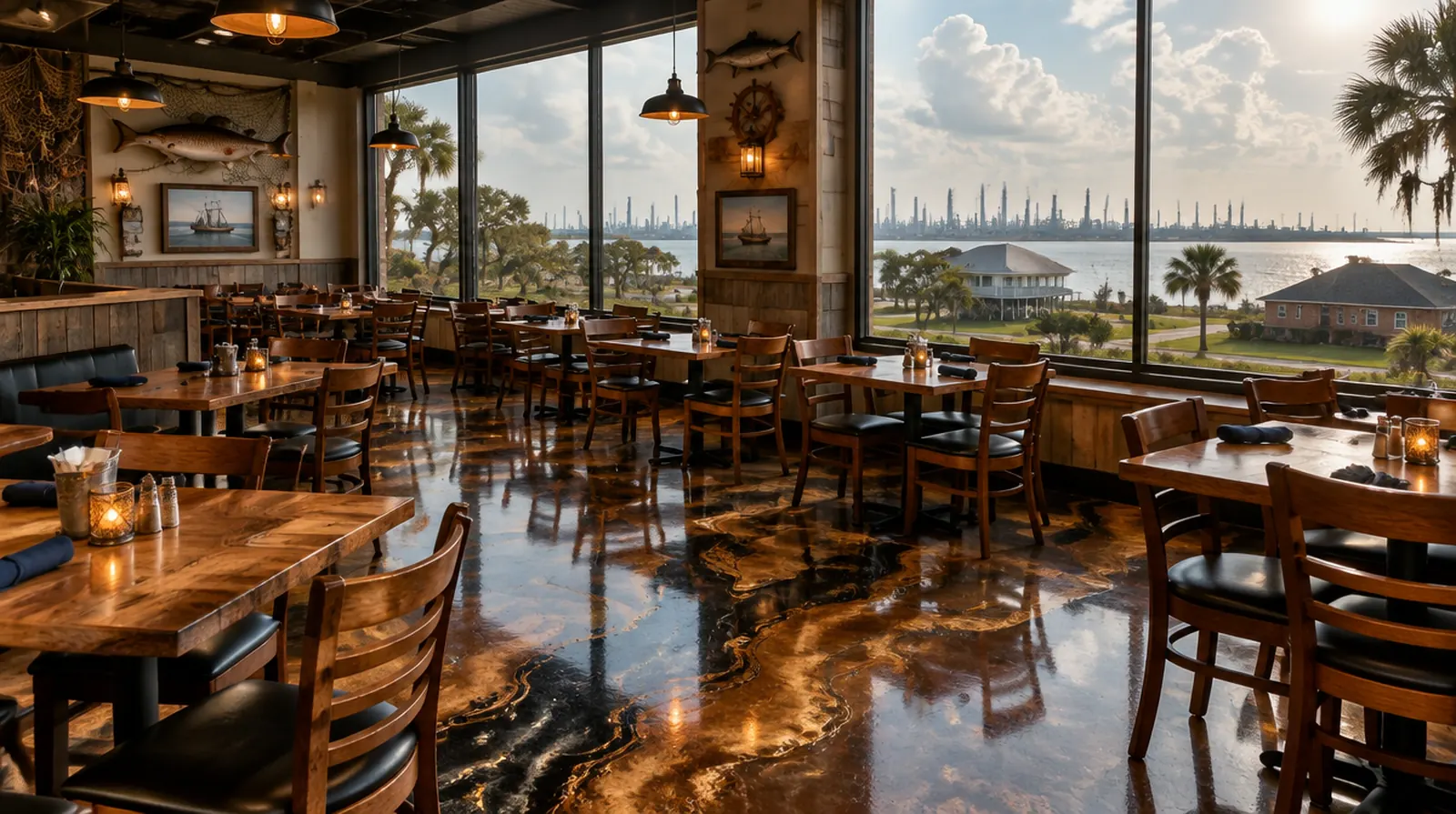
Restaurants, salons and showrooms
Businesses use metallic floors to stand out. Restaurants, salons, barbershops, boutiques and vehicle showrooms get a floor that catches the eye, reflects light and cleans quickly between customers. Coastal blues and seafoam tones are popular, as are bronze, copper and charcoal.
Choosing colors
We can blend two or three colors for more movement. Darker bases show more depth, while lighter bases feel bright and airy. We bring physical samples so you can see how colors react under your lighting.
Lighting changes the look
Metallic floors react to light. Daylight through windows, recessed fixtures and accent lighting each bring out different patterns. We look at your lighting during the estimate and suggest colors that will look best.
Topcoats and durability
We finish metallic floors with a clear urethane or polyaspartic topcoat that resists scratches, stains and UV fading. For busy commercial spaces, we may recommend a satin topcoat that hides fine scratches.
Preparation
Metallic floors show every flaw, so preparation is critical. We grind, fill cracks and patch holes before the base coat. Moisture-mitigating primers protect against vapor from below.
Installation timeline
Most metallic floors take two to three days, including prep, primer, the metallic coat and topcoat. Furniture can usually return after a few days.
Care
Dust mop regularly, damp mop with a neutral cleaner and use felt pads under furniture legs.
Comfort and climate
Concrete floors stay cooler than carpet in summer, which many homeowners appreciate during long, hot months. Area rugs add warmth and softness where you want it, and they can be swapped out easily. Metallic floors also reflect light, making rooms feel brighter and more open.
Planning the room
Before the pour, we talk about furniture placement, traffic flow and where light comes in. Those details guide how we move the material, so the most striking patterns land where people will see them. We also plan transitions to doorways and other flooring so edges look clean.
Commercial use and traffic
In busy restaurants and salons, we recommend a satin or matte topcoat and a simple dust mop routine. These steps keep the finish looking fresh between recoats, which are quick and do not require redoing the metallic layer. Ask us about service intervals for your traffic level.
Cost factors
Price depends on size, number of colors, slab condition and moisture treatment. Our quotes are itemized so you can see where the money goes.
Want ideas? Ask to see photos of past metallic floors in similar rooms, and we will help you narrow down color pairings that suit your space, your furniture and the way light moves through the room during the day.
We also offer small sample pours on boards so you can see the depth of the finish at home before committing.
Design a metallic floor
Call (409) 250-4105 for a free estimate.