
What polishing does
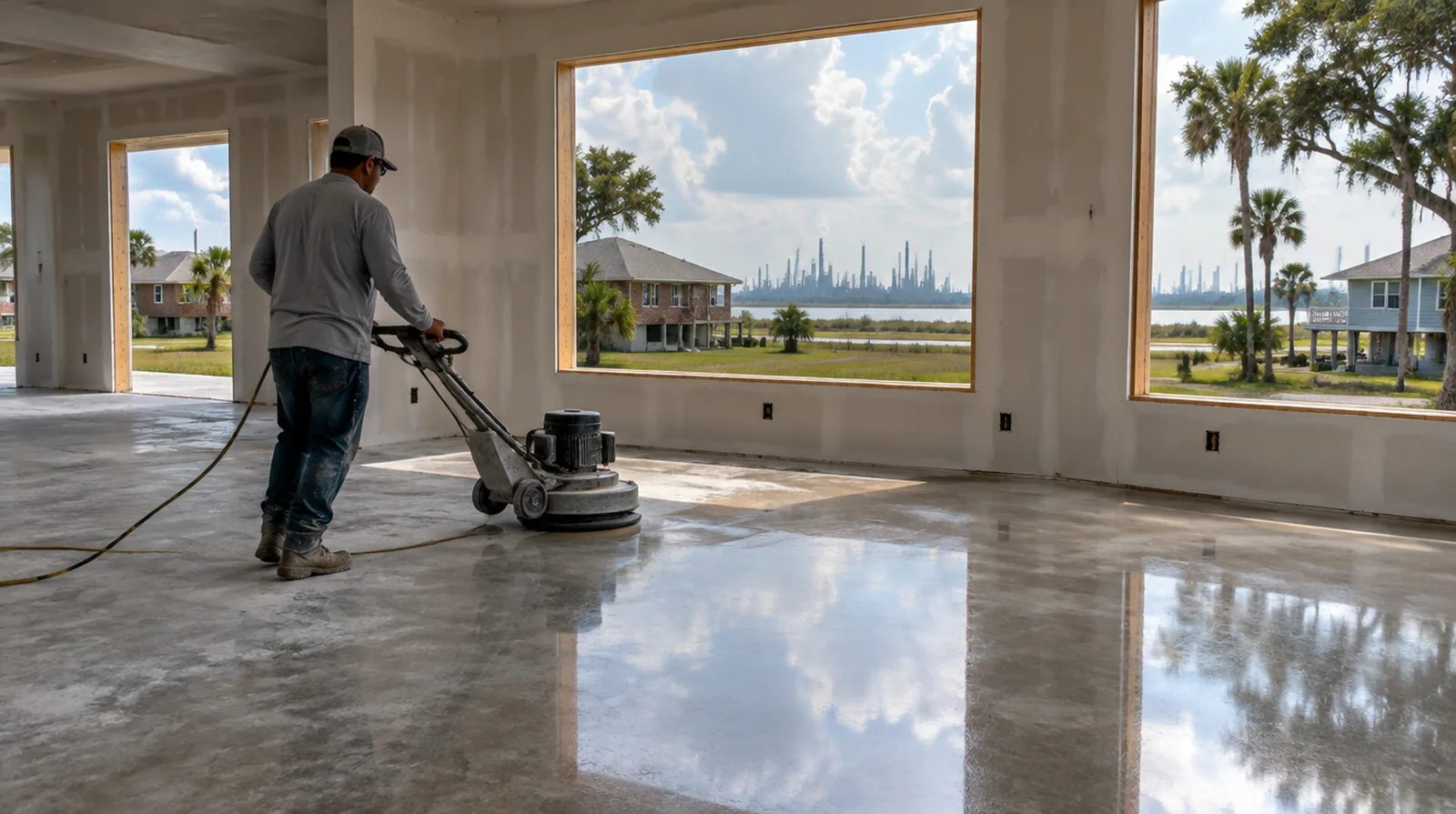
Polishing uses diamond tooling to grind the concrete surface in progressive steps. A densifier hardens the surface, and a guard adds stain resistance. The result is a smooth, reflective floor that is part of the slab rather than a coating on top.
Why it works in humid climates
Because polished concrete is not a film, moisture vapor can pass through without causing blisters or peeling. That makes it a strong option for slabs with moisture issues that would make coatings risky. It does not trap mildew like carpet, and it cleans easily after spills or tracked-in mud.
Choosing the look
Polished concrete can be matte, satin or high gloss. It can show only the cream, salt-and-pepper aggregate or larger exposed stone. We test a small area so you can see the result before polishing the whole floor.
Retail, offices and churches
Stores, offices, churches and community halls like polished concrete for its modern look and low maintenance. It handles heavy foot traffic, carts and events.
Warehouses
Large warehouses benefit from densified, ground concrete that reduces dust and resists forklift wear at a lower cost than a full coating.
Homes after remodels
Homeowners remodeling after water damage often choose polished concrete. It resists mold, cleans easily and pairs well with area rugs.
Dyes and design
Dyes add color during polishing, from subtle neutrals to bold blues. They can create borders, logos or zones.
Maintenance
Dust mop regularly, clean with a neutral cleaner and burnish periodically. Reapply guard every year or two.
Timeline
Homes and small shops take a day or two. Large commercial floors are phased over several days.
Cost compared to other flooring
Because polishing uses the slab you already have, it avoids the cost of new flooring material. It also avoids replacing carpet or tile after water events and the frequent waxing that vinyl requires. Over the life of a building, the savings add up.
Slip resistance
Polished concrete is not slippery when dry and clean. Near entrances where rain is tracked in, we recommend walk-off mats and can adjust the sheen level for better traction.
See it first
We can polish a small test area during the estimate so you can see the aggregate, color and sheen before committing to the full floor.
Older slabs
Older concrete may have patches, cracks and stains. Polishing reveals some of that character. We can fill cracks and use dyes to even out color, or embrace the history of the slab for an industrial look.
Churches and community halls
Fellowship halls and community rooms see events, tables, chairs and spills. Polished concrete handles all of it and cleans up quickly after a busy weekend, without the stripping and waxing that vinyl tile demands.
Polishing new construction
When a building is going up, we can polish the slab before walls and fixtures go in, which saves time and gives a more uniform result. We coordinate with your contractor so the slab is protected afterward.
Indoor air
Polished concrete does not trap dust, pollen or mildew spores the way carpet does, and it does not off-gas like some flooring products. For families with allergies and businesses focused on healthy indoor air, that is a real benefit in a humid climate where carpet can stay damp.
Thinking about a polished floor at home? We look at the slab, note cracks and patches and explain how the finished floor will likely look before you decide.
See a polished sample
Call (409) 250-4105 for a free estimate.