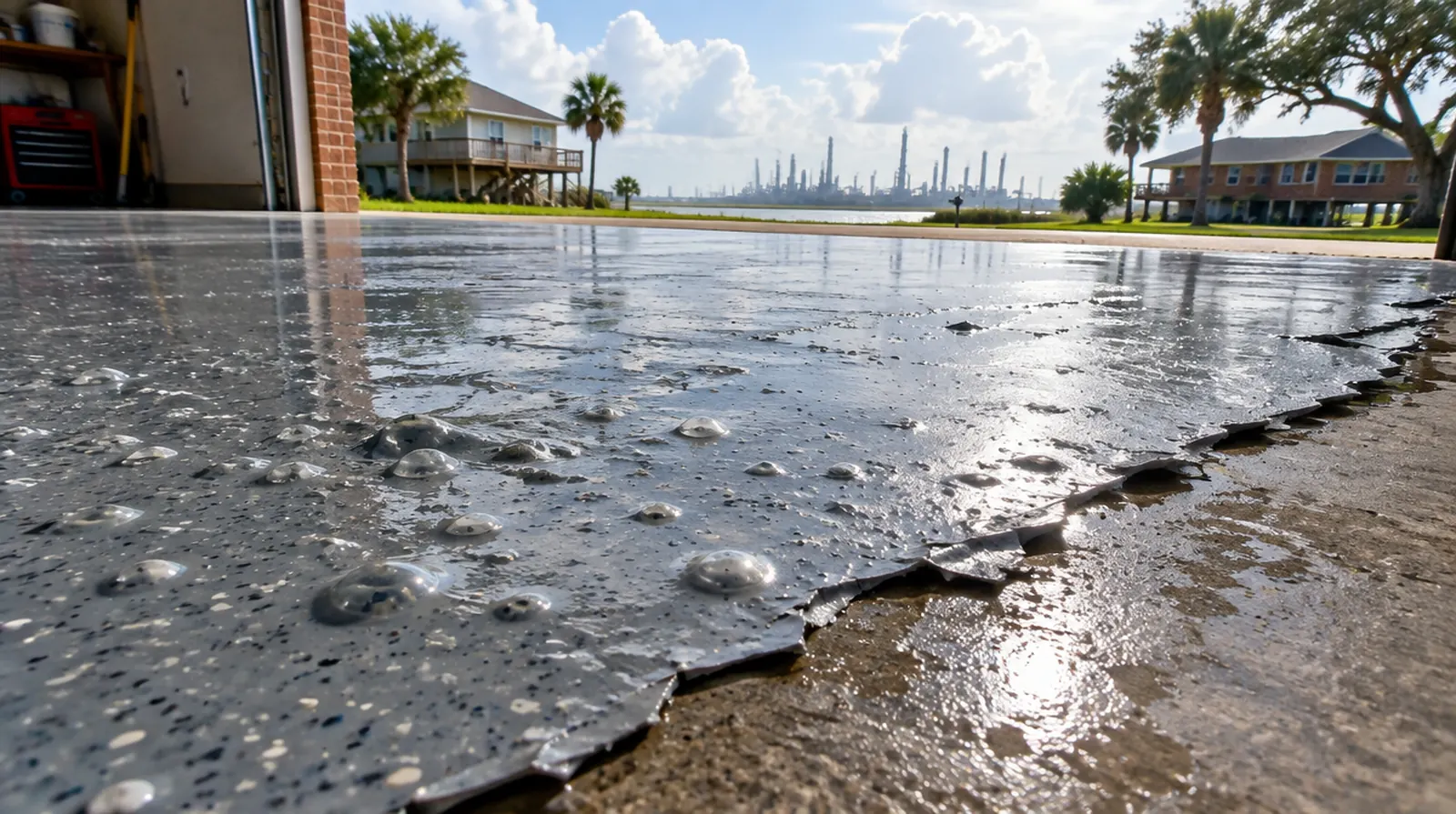
Why coatings fail here
Most coating failures on the coast come from moisture vapor pushing up through the slab. Other causes include poor preparation, coating over old paint, thin DIY kits and hot tire pickup. Salt and chemicals can speed up the damage.
What we see most
We see blisters and bubbles on garage floors, peeling in tire paths, chipped shop floors, coatings lifting at doorways after heavy rains and yellowed epoxy near garage doors.
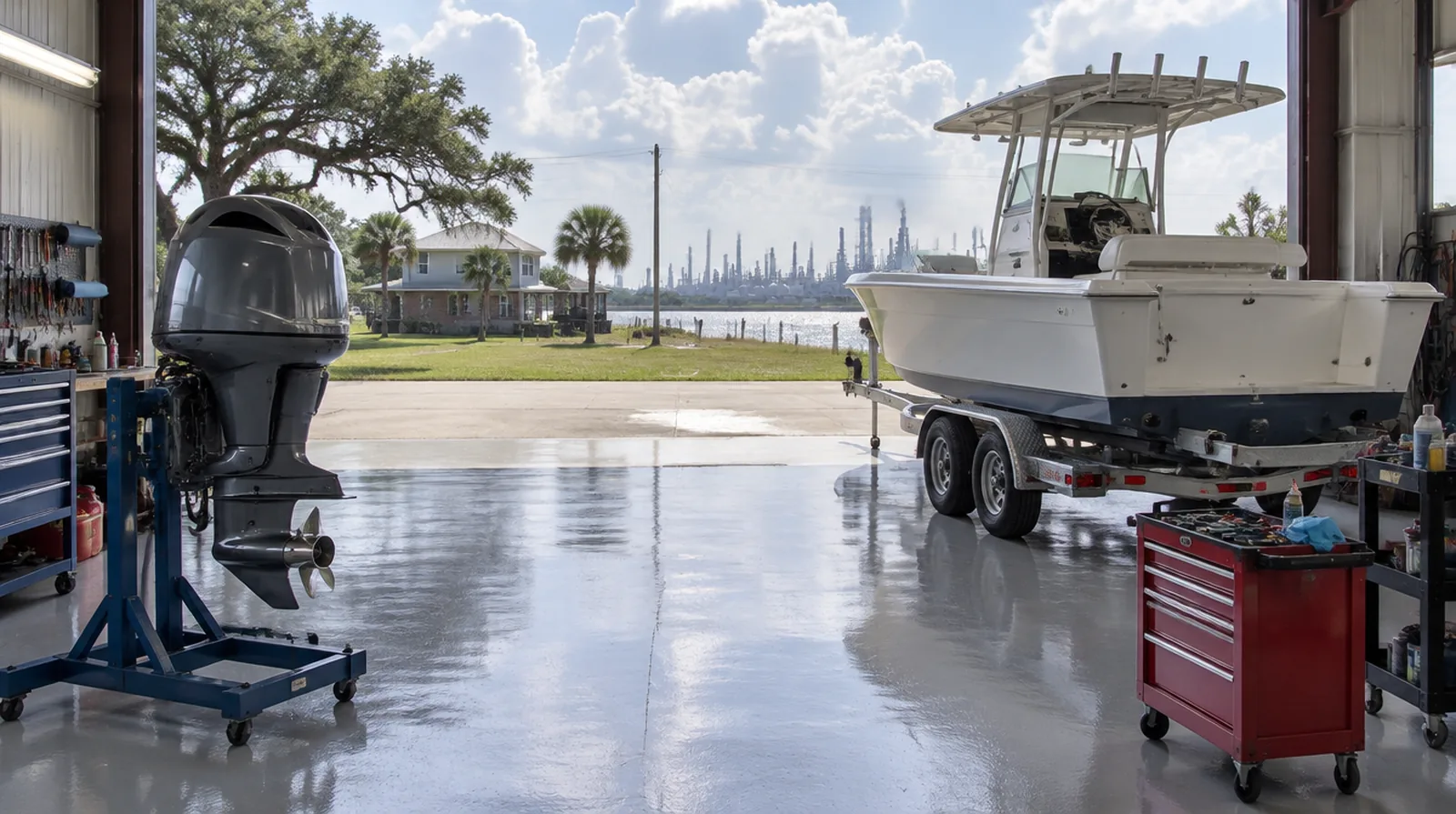
Diagnosing the problem
We test moisture, check adhesion, look at the failure pattern and ask about the floor's history. That tells us whether a spot repair will hold or whether the whole floor needs to be redone.
Spot repair versus full replacement
Small, isolated damage can often be repaired. When blistering or peeling is widespread, the bond has failed broadly and full removal is the better choice.
Removing failed coatings
We grind off failed coatings with dust collection, repair the concrete and install a moisture-mitigating primer before the new system.
After water damage
If high water reached your floor, the coating may lift as the slab dries. We assess the damage and recommend the right repair once the concrete has dried enough.
Matching colors
Exact matches on faded floors can be hard. For visible areas, we often recommend a new topcoat over the whole floor after repairs.
Commercial repairs
We repair worn areas in shops and warehouses after hours so work can continue.
Getting started
Send photos and the age of the coating, and we can give you an early idea of what will be needed.
Oil-soaked slabs
Garages and shops with years of oil in the concrete can push coatings off from below. We grind deeper in stained areas and use oil-tolerant primers so the new coating bonds properly.
Cracks under coatings
When a crack in the slab splits the coating above it, we cut out the coating along the crack, fill it with a suitable filler and recoat so the repair blends in.
What happens at the visit
We look at the failure pattern, tap the coating to find loose areas, test moisture and take photos. You get a written estimate covering spot repair, partial replacement or full replacement, with our recommendation and reasons.
Preventing future failures
After a repair, we share care tips such as rinsing salt, avoiding harsh solvents and using mats under hot tires, so the new floor lasts.
Failed DIY kits
Thin roll-on kits are tempting, but on coastal slabs they often blister within months. If you have a kit floor that is lifting, we remove it completely, address the moisture and install a system built for local conditions.
Prevention is cheaper
Catching a small blister or peel early usually means a smaller repair. Loose edges catch tires and boots and lift more coating every week, so calling early often saves money.
Commercial schedules
For shops and warehouses, we can stage repairs in sections, work nights or weekends and use fast-cure materials, so the floor is back in service quickly. We coordinate with your safety team and follow site rules on every job, and we keep you updated on progress so you can plan around each section as it comes back online.
Not sure whether your floor can be saved? Send photos of the damaged areas and tell us roughly how old the coating is. We can usually give an early idea of whether a repair or a full replacement is likely before the visit.
Fix a failing floor
Call (409) 250-4105 for a free estimate.