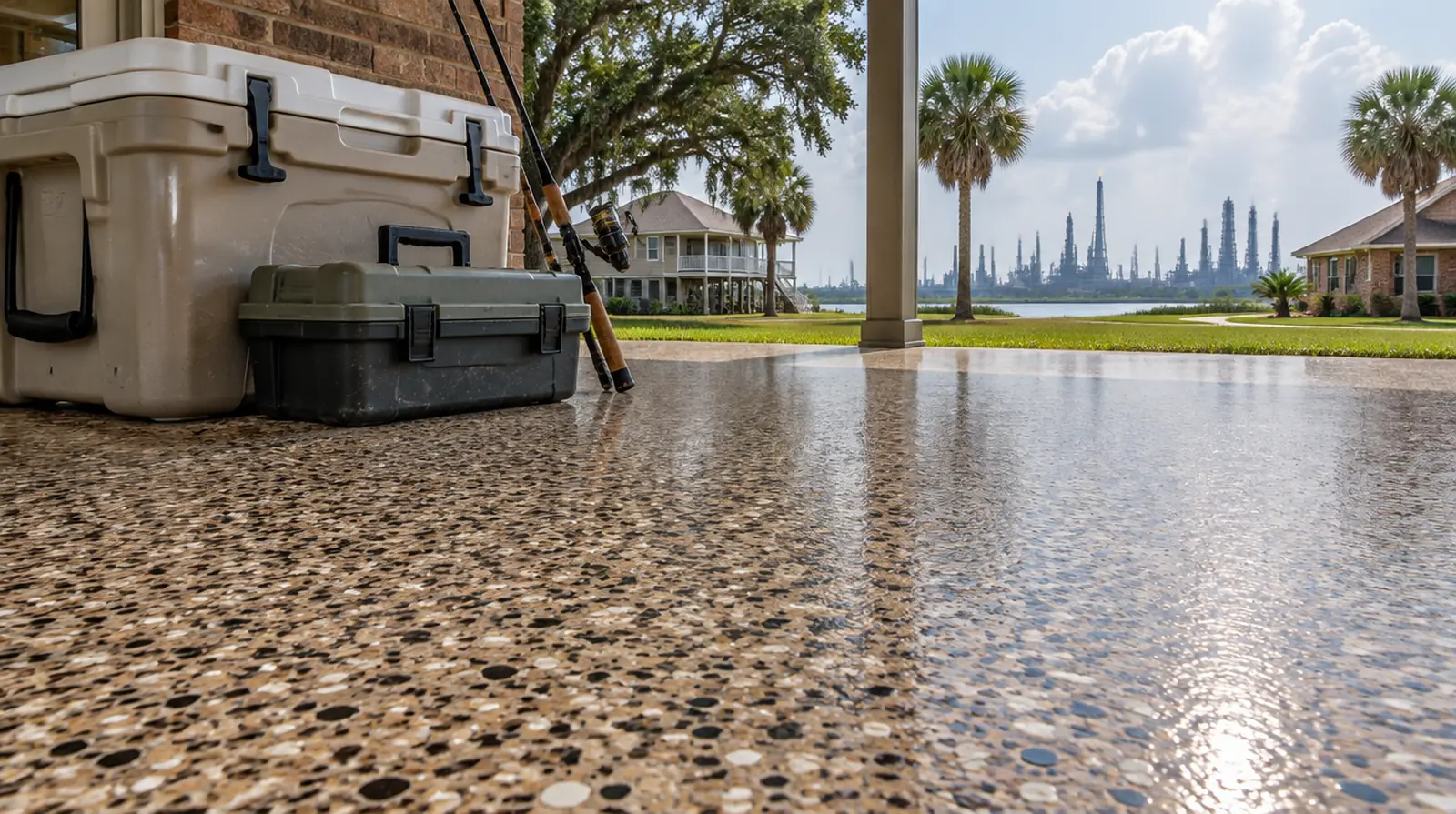
What a flake system is
A flake floor begins with a pigmented base coat over ground concrete. While the base is wet, we broadcast colored vinyl chips across the whole floor until no base coat shows. After it cures, we scrape and vacuum loose chips and seal everything with a clear topcoat. The finished floor has a speckled, stone-like look and a slight texture.
Why it suits the coast
Sand, mud and salt residue get tracked into garages and shops every day. The random flake pattern hides that dirt between cleanings. The texture adds grip when humidity leaves a film of moisture on the floor or when wet shoes come in from rain. The layered build creates a thick coating that resists impacts from dropped tools and gear.
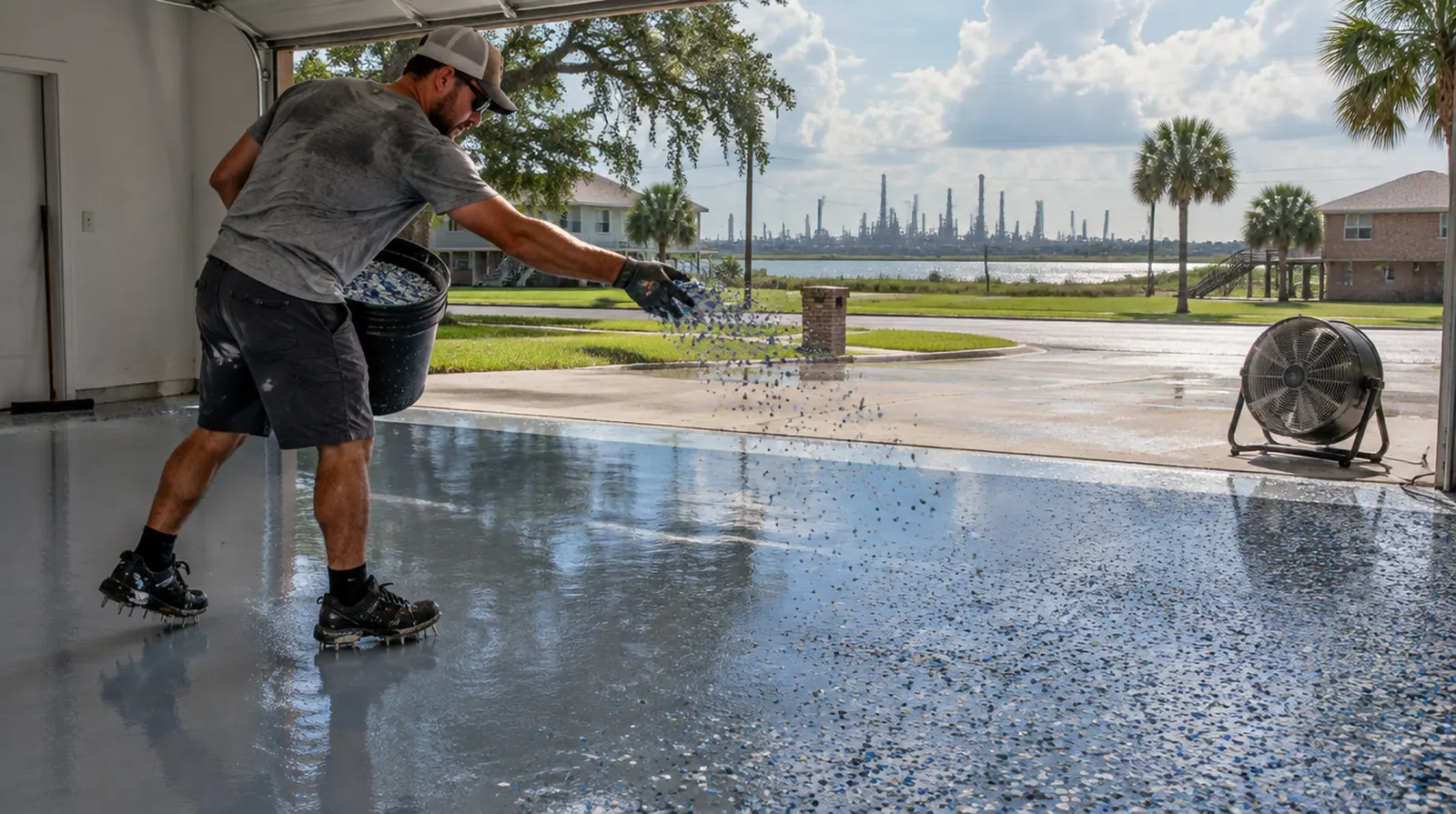
Choosing a blend
Popular blends include tan and brown for a warm look, gray and black for a modern feel and blue or teal mixes that nod to the water. Chip size changes the look too: larger chips are bold and speckled, while smaller chips look finer and more like granite. We bring sample boards so you can compare blends in your own space.
Texture and traction
We control texture by adjusting the topcoat thickness. A thinner topcoat leaves more texture for grip, which helps near doors and in shops. A thicker topcoat feels smoother and is easier to mop. We can also add fine aggregate to the topcoat in high-risk areas.
Moisture-ready installation
Like every system we install, flake floors start with moisture testing. When the slab shows high vapor transmission, we use a moisture-mitigating primer under the base coat. That prevents the blisters and peeling common with thin kits on coastal slabs.
Where flake works best
Garages, workshops, laundry rooms, mudrooms, patios under cover, marine shops, gyms, locker rooms and commercial break rooms all benefit from flake floors. Anywhere you want a seamless, cleanable, grippy surface, flake is a strong choice.
Stem walls and steps
We can carry the flake up the stem walls and onto steps leading into the house. That gives the room a finished look and protects edges where water and dirt collect.
Installation timeline
Most flake floors are completed in one to two days. Foot traffic is usually fine the next day, with vehicles returning a few days later depending on the topcoat.
Care
Hose off sand and salt, mop with a neutral cleaner and squeegee water. The topcoat can be refreshed later if the floor sees heavy wear.
Questions to ask any installer
Ask whether they test moisture, whether they grind or acid etch, how thick the base coat is, whether the flake is full broadcast and which topcoat they use. Those answers predict how long a floor will last far better than price alone. On coastal slabs, the moisture question matters most, because skipping it is the main reason flake floors blister here.
Matching your home
Brick ranch homes often have warm reds and browns, while newer homes lean toward grays and whites. We hold sample boards against your walls and cabinets so the floor fits the rest of the house.
Shops and marine bays
Boat and engine shops deal with salt water, fuel and dropped parts all day. A flake floor gives grip on wet surfaces, hides grime between washdowns and makes small parts easier to spot.
Ask to see sample boards in several chip sizes during your visit.
Choose your flake blend
Call (409) 250-4105 for a free estimate.